Software that works from the first click.

OneClick is a software company in Jordan. We design and build websites, mobile apps and business systems, and we stay with you after launch.

Web · Mobile · Systems

An illustration of a product being assembled on a screen and a phone

Built with

  • Angular
  • .NET
  • React
  • React Native
  • Laravel
  • Node.js
  • Flutter
  • PostgreSQL
  • SQL Server
  • Docker
  • AWS
  • Azure

What we build

Six things we do well. Open any one of them to see what you actually get and what we build it with.

  • What you get

    • A site that loads in under two seconds on a normal phone connection
    • Arabic and English side by side, each laid out the way it should read
    • A content panel your team can use without calling us
    • Search-ready pages, analytics, and a deploy pipeline you own

    We build it with

    • Angular
    • React
    • Next.js
    • .NET
    • Laravel
    • PostgreSQL
  • What you get

    • One codebase published to the App Store and Google Play
    • Push notifications, maps, payments and camera wired in properly
    • Works offline where it matters, and syncs when the signal returns
    • We handle store submission, review replies and every update after that

    We build it with

    • Flutter
    • React Native
    • Firebase
    • .NET
    • Node.js
  • What you get

    • Products, stock, offers and orders in one place your staff can run
    • Local and card payments, cash on delivery, and clear refund handling
    • Multi-vendor mode: each seller manages their own store, you set the commission
    • Delivery, invoicing and accounting connected, not copied by hand

    We build it with

    • Laravel
    • .NET
    • Angular
    • PostgreSQL
    • Stripe
    • Redis
  • What you get

    • Your real process, modelled as it works — not bent to fit off-the-shelf software
    • Roles and permissions, so each person sees exactly what they should
    • Reports and dashboards that answer the questions you ask every week
    • A full audit trail: who changed what, and when

    We build it with

    • .NET
    • Angular
    • SQL Server
    • PostgreSQL
    • Docker
  • What you get

    • Flows and wireframes first, so we agree on the shape before any pixels
    • A design system with real components, not a folder of one-off screens
    • Arabic and English designed together, so neither one feels translated
    • Contrast, focus states and touch targets checked against WCAG AA

    We build it with

    • Figma
    • Design systems
    • Prototyping
    • WCAG AA
  • What you get

    • Payment gateways, SMS, WhatsApp, shipping and accounting connected end to end
    • Hosting on AWS or Azure with automated deploys and nightly backups
    • Monitoring and alerts, so we usually know before your customers do
    • A support agreement with a response time written down, not implied

    We build it with

    • AWS
    • Azure
    • Docker
    • CI/CD
    • Monitoring

Products we have shipped

Products we designed, built and still run today. Both handle real orders and real money every day.

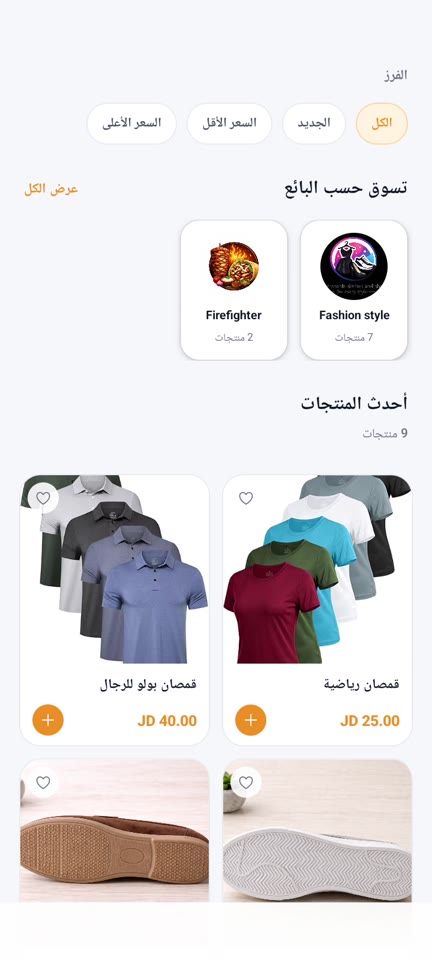
The OneClick Commerce mobile app

OneClick Commerce

A multi-vendor marketplace where each seller runs their own store while customers shop across all of them in a single cart. Vendors manage products, stock and orders themselves; the admin sets commissions and pays everyone out on schedule.

Key features

  • A vendor dashboard for products, stock, offers and order status
  • One cart across vendors, split into separate orders at checkout
  • Commission rules, vendor payouts and a full ledger for the admin
  • Arabic and English storefront, both ready from day one

Platforms

Web · iOS · Android

Built with

  • .NET 8
  • Angular
  • React Native (Expo)
  • SignalR
  • RabbitMQ
  • Firebase
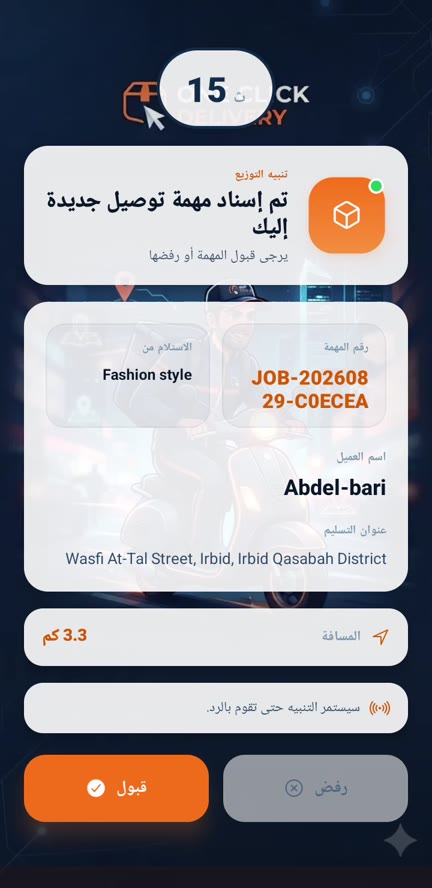
The OneClick Delivery mobile app

OneClick Delivery

A dispatch platform that turns an order into a delivery. Dispatchers assign drivers from one board, drivers get the job on their phone, and the customer watches the route move in real time. It plugs straight into the marketplace above.

Key features

  • Assign by hand or let the board pick the nearest free driver
  • A driver app with the route, proof of delivery and cash collected
  • Live tracking for the customer, with an honest arrival estimate
  • Daily settlement per driver and per zone, exported for accounting

Platforms

Web · iOS · Android

Built with

  • .NET 8
  • Angular
  • React Native (Expo)
  • Redis
  • SignalR
  • Firebase

How a project moves

The same four steps every time, so you always know where your project is and what happens next.

  1. Discover

    We sit with you and learn the business: who uses this, what slows them down today, and what has to be true for the project to be worth doing. Then we agree on scope, timeline and price before anyone writes code.

    A written scope, a timeline and a fixed price

  2. Design

    Flows first, then wireframes, then the real interface in both Arabic and English. You approve the screens before we build them, so nothing expensive gets discovered late.

    Approved screens you can click through

  3. Build

    We build in weekly cycles. Every week you get a working link, not a status report — you open it, click around, and tell us what to change while changing it is still cheap.

    A working build every week

  4. Launch and support

    We deploy, move your data across, and train your team on the parts they will use daily. After that we stay on: monitoring, fixes, and the next round of improvements.

    A live product and a support agreement

A small team you talk to directly

We are a team of one to ten people based in Jordan. When you work with us you talk to the people who design and build your product, not to an account manager who passes messages along.

We work in Arabic and English, with clients in Jordan and across the Gulf, and we build products that read correctly in both directions from the first day.

  • Small, senior team
  • Based in Jordan
  • Arabic and English

How we work

Clear communication
One point of contact, weekly updates you can read in two minutes, and a plain answer when something turns out to be harder than expected.
Quality you can see
You click through the real product every week. Progress is something you use, not a percentage in a report.
Long-term support
Launch is the middle of the project, not the end. We keep your product running, fix what breaks and add what you need next.

Questions we hear often

If your question is not here, ask us directly. We reply within one working day.

How long does a typical project take?

A marketing site takes two to four weeks. A mobile app or an online store usually takes eight to fourteen weeks. A full business system depends on how many processes it replaces, and we break it into releases so you get the first useful piece in about six weeks instead of waiting for everything.

How much does a project cost?

A marketing site starts around 1,000 JOD. An online store or a first mobile app is usually between 3,000 and 7,000 JOD. Business systems start around 7,000 JOD and rise with the number of user roles and integrations. What moves the number is scope, how many roles need their own screens, how many external systems we connect to, and whether the design is new or already exists. We quote a fixed price after the discovery step, so the figure you approve is the figure you pay.

Do you build Arabic and RTL products?

Yes, and we design both directions together from the start rather than mirroring an English layout at the end. That means Arabic typography with the right line height, numbers and dates that read naturally, icons that flip when they should and stay put when they should not, and forms that make sense to someone typing in Arabic. This site is a working example.

Who owns the code when the project is done?

You do. The source code, the designs, the database and the hosting accounts are all yours, handed over in your own repository from the first week — not at the end. There is no licence to keep paying and nothing locking you to us. If you ever want another team to take over, everything they need is already in your hands.

Do you offer maintenance after launch?

Yes. Every project includes thirty days of free fixes after launch. After that, most clients move to a monthly support agreement that covers monitoring, security updates, backups and an agreed number of hours for changes. It is optional, and you can stop it whenever you want.

Do you work with clients outside Jordan?

Yes. Most of our work outside Jordan is in the Gulf, and we work remotely as standard: a weekly call, a shared board you can open any time, and a working link every week. We overlap with Gulf working hours, and we invoice in JOD or USD, whichever suits your accounting.

Tell us what you want to build

Fill this in and send it through WhatsApp or email. We read every message ourselves and reply within one working day.

Or reach us directly